
Advice

Cultivating Gratitude: Tips from National University’s Mind, Body, Wellness Student Organization

We asked members of National University’s Mind & Body Wellness Student Organization how they cultivate gratitude.

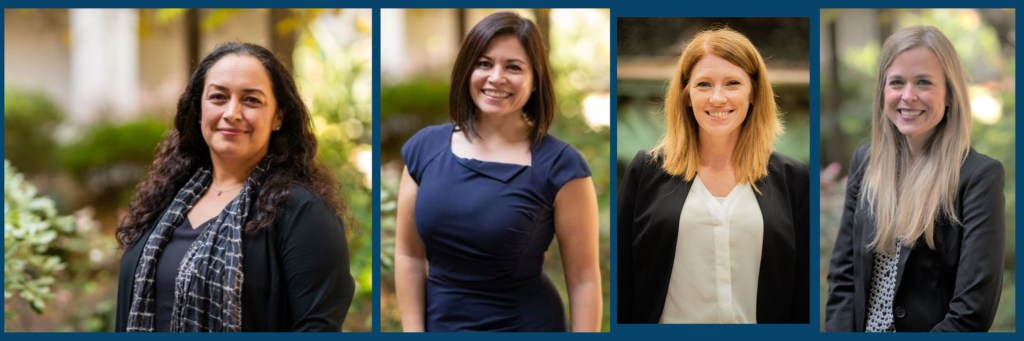
Meet the panelists from the Mind & Body Wellness Student Organization: Maria, Jacqueline (President), Cristyn, and Rae Lynn.

What are you grateful for?

Maria: In addition to being grateful for my health and that of my family, I am grateful to both National University and the NU Scholars Program. National University has helped me to believe in myself and my ability. I am prepared to make a positive impact in my community, and that makes me feel a great sense of fulfillment and gratitude.

I will always feel grateful for the opportunity to be a student leader. This experience has increased my self-confidence so much. I see myself as more capable and confident and I know this will benefit me greatly in my career.
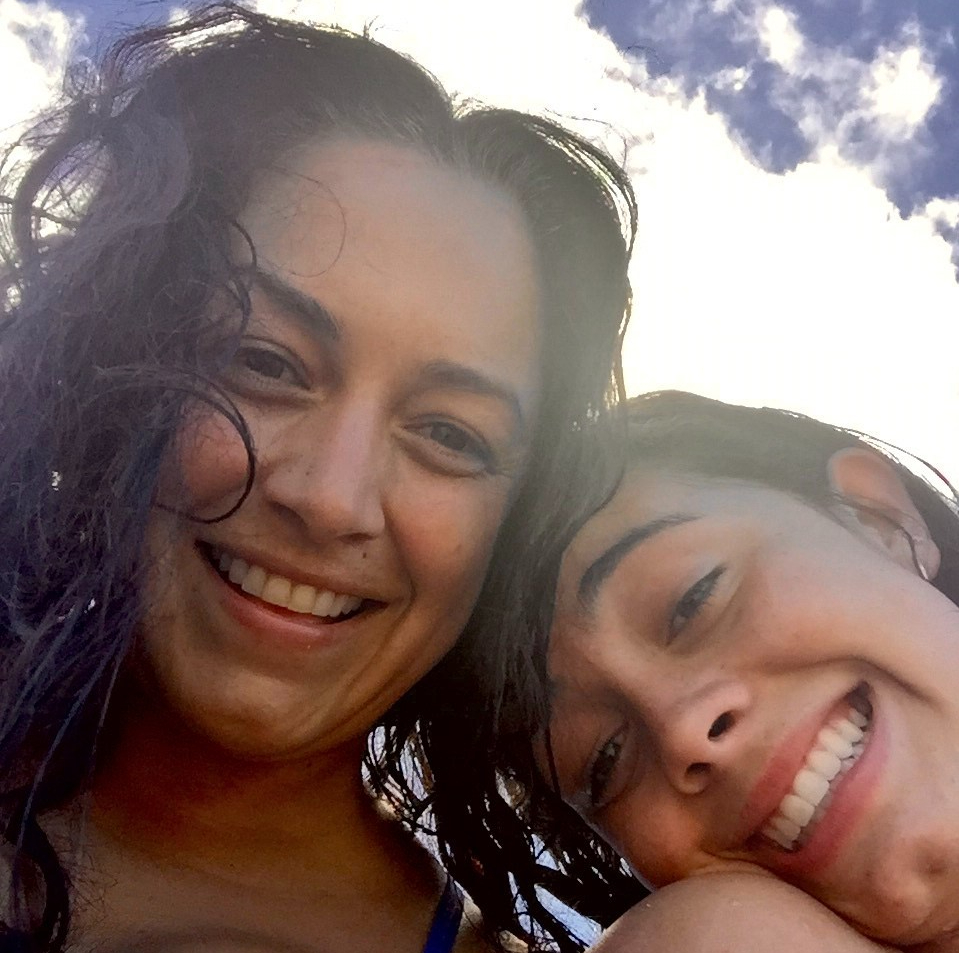
Maria and her daughter Bella enjoy a gorgeous pre-COVID day in Hawai’i

Rae Lynn: This year has been a year of unexpected challenge and difficulty for most people. While it’s easy to be grateful when things are going your way and when life is going according to plan, gratitude is that much more meaningful when you have to seek it out in the midst of less-than-ideal circumstances. When I focus on the negative things around me, I can often get stuck in negative emotions and forget all of the things that there still are to be thankful for. And, even in 2020, there is plenty to be grateful for!

I am thankful for my health, and the health of my family members, in a year where health is not to be taken for granted. Although I often find myself complaining about being “stuck” inside with my kids, I am thankful for the extra time I have gotten this year with my family. This time with them is a gift, and how fortunate we are as a family to be able to work from home and help support our children as they learn from home.

I am also grateful to National University for an education that will help me become the best teacher I can be. I am thankful for the opportunities for scholarship, service, and leadership development, and for this community of likeminded individuals seeking to learn and make an impact on the world.

As a student leader, I am grateful for the opportunity to give back: Leadership isn’t about being on top of a podium and having people look up at you, but about living a life that inspires and serves others. As a student leader, I have been able to use my leadership training to give back to others who are on their journey of going back to school. It has been incredible to be able to inspire them and help equip them as they take those bold and scary steps of entering college for the first time.

Jacqueline: I am most grateful for my life and my health – the possibilities are endless when you are alive and healthy. I am incredibly blessed and grateful for my family, my wonderful husband, and my children, who understand and support my dreams. I am thankful for the experiences that have taught me to live life with a grateful heart.

I am grateful to NU for believing in me, and for showing that they value me as not only as a student, but as a person. The opportunities for professional development opportunities that have been provided have helped me grow in a way I did not think possible for me, and have allowed me to dream bigger than ever before.

After dropping out of eighth grade, I thought my education journey was over, and as a wife, parent, and older nontraditional student, I certainly never thought that I would have a leadership opportunity. Yet here I am, not only completing a master’s program, but being involved at NU as a student leader! This opportunity has helped me to develop my professional persona and to become more comfortable with public speaking.

Cristyn: Although we still have a long way to go, I am very grateful that I live in a time where equality for all has begun to make huge advancements. This is due to the hard work and bravery of so many that have come before me.

I am grateful to be able to work a full-time job and raise three kids while attending university classes. I could not do this without the online platform and asynchronous classrooms National University offers. On top of that, every professor, advisor, school administrator, and help desk professional has helped me to the best of their abilities.

I truly believe that “it takes a village,” especially in a year like 2020. It was only after we all retreated behind our walls that we realized how much we need each other. As a student leader, I hope to reach as many other students as I can, because I know first-hand that a smile or a word of encouragement can mean the difference between someone continuing on their path to higher education or turning away from it. By reaching out to others, we remind each other that are not alone. We are all in this together and we can all be successful at achieving our goals.

What advice would you give to others about building an attitude of gratitude?

Maria: Be unrelenting when it comes to creating an attitude of gratitude. Feeling and expressing gratitude centers you and helps you reflect on what is truly important in your life. Expressing gratitude humanizes us. My advice is to express your gratitude every chance you get!

Rae Lynn: Recently, after spending too much time on social media, I found myself beginning to compare my life to the “highlight reel” of others. It seemed like everyone else’s life was so much better than mine! I knew I needed a mind-shift. I immediately shut off my phone and grabbed my journal to make a list of all the of things in my life I am grateful for. As I wrote about my family, my marriage, my home, my friendships, and the many amazing opportunities I have been able to experience in life, my negative mood changed into an attitude of gratitude. While my life is not perfect, it is mine and it is beautiful. So, if you find yourself focusing on the “have-nots” or the things that you might be lacking in your life, take some time to reorient yourself and remind yourself of the things you do have that you are grateful for. I promise, it will change your perspective!

Jacqueline: Being grateful helps us feel happier by allowing us to enjoy the simple things we sometimes take for granted. Focus on the good things in life and learn to appreciate them more. Celebrate yourself and your daily accomplishments – If you don’t think they are a big deal, shift your thoughts, and make them a big deal! Share this attitude and set an example for by appreciating and show gratitude to people around you. In short, look at everything with a grateful heart. Everything that happens has something to offer, and even adverse events bring valuable lessons that help us grow.

Cristyn: We have all had both struggles and blessings – the trick is to see the struggles as the building blocks of success. None of us learned to walk before falling down a few times and none of us learned to talk without mispronouncing a few words. Every failure has a lesson and every lesson helps us grow. Once you accept that even failure is a step forward, it’s hard not to be grateful for all of our experiences.

Want to learn more?

Did you know that all active National University students receive free LinkedIn Learning membership through their Single Sign-On? And that many of these courses are eligible for Continuing Education Units in fields from Project Management to Accountancy?

This short video below offers some quick tips on how to build a habit of expressing gratitude in a high-impact, professional way:
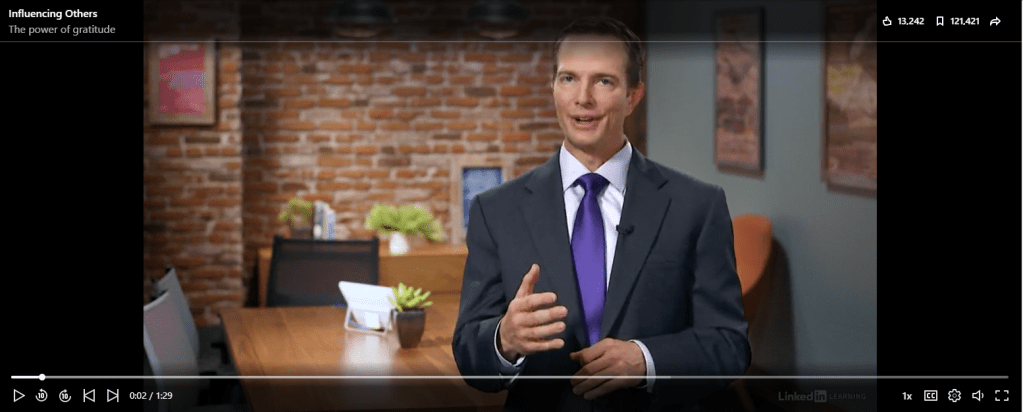
Want to learn more about how to cultivate gratitude for professional success? Check out “The Power of Gratitude” on LinkedIn Learning.

Want to learn more about joining a student organization at National University, or completing our Effective Leadership Certificate of Completion? Attend our next monthly NU Engage virtual event. Looking forward to seeing you at our next NU Engage, Tuesday January 12, 2021 at 5:30 pm! Click here to register.
Advice

Managing Professional Conflict- With Cris Gilbert, NU Ombudsman

It was the Center for Student Engagement & Activities‘ pleasure to host Cris Gilbert, the NU Ombudsman, for a presentation on Managing Professional Conflict. In this 1-hour presentation, Cris gives an introduction to the Office of the Ombudsman, and explores some basic concepts and competencies in conflict resolution.

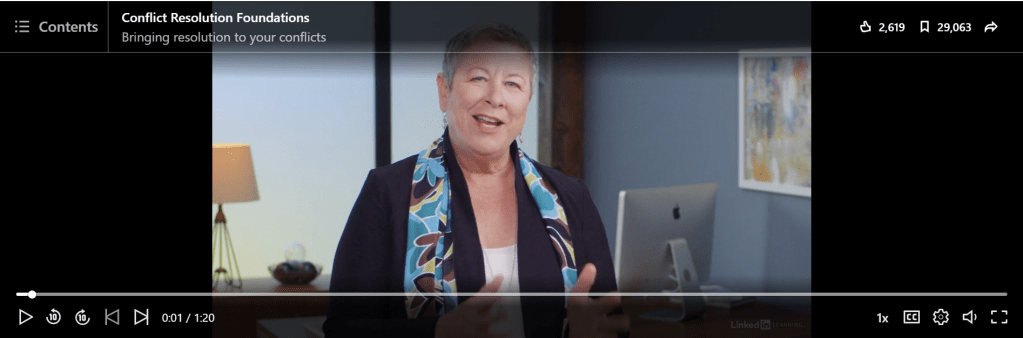
This presentation aligns with “Conflict Resolution Foundations.” This is just one of thousands of free courses that National University students have access to through their LinkedIn Learning membership. This membership can be accessed through your single single on.

Note: This link will only work for National University affiliates.

This 51-minute LinkedIn Learning Course will cover the following learning objectives:

  • Define the “Name, Blame, Claim” cycle.
  • Distinguish different types of conflict styles.
  • Recognize contentious tactics.
  • Identify issues and needs.
  • Explain how to reframe.
  • Increase conflict capacity.

Successful completion of this course results in a certificate of completion that can be printed or shared via your LinkedIn profile.

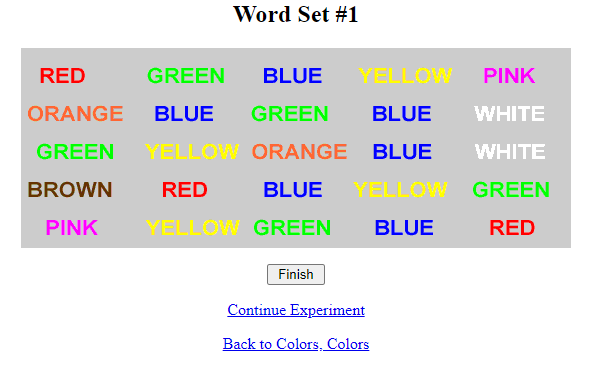
Interested in taking The Stroop Test from Cris’s Presentation yourself? Click on the image below to give it a try!

Join us for our last NU Engage for 2020 on Tuesday, December 8 from 5:30-6:15 p.m. PST.

Logon to the NU Speakers Series on Wednesday, December 8 at 5:30-6:30 p.m. PST. Register here for “How to Survive Financially During these Uncertain Times” with NU alum, Brent Wisley (BBA ’83, MBA ’86).

Stay tuned for more events in 2021!

Advice

Managing Conflict: Tips from Students in the Mind, Body, Wellness Student Organization

We asked members of Mind, Body, Wellness Student Organization how they manage conflict.

Meet the panelists from the Mind, Body, Wellness Student Organization: Maria, Jacqueline (President), Cristyn, and Rae Lynn.

To learn more about managing conflict, attend Managing Professional Conflict with NU Ombudsman, Cris Gilbert on Tuesday, November 17 at 5:30, hosted by CSEA. Register here.

If you would like to write for our December blog (Topic: “Gratitude”), please contribute here.

What’s a conflict you have faced and how have you overcome it?

Jacqueline: An example of a conflict that arises frequently is when students are assigned group projects during some of our classes. Sometimes it goes smoothly, but there are times where peers disagree, and I have been the mediator for the group. I usually try to remind everyone we are on the same team working on the same goal. It is easier to reach consensus when we are reminded we are all on the same boat, we are all learning, and in the end, we all want a good grade.

I usually try to remind everyone we are on the same team working on the same goal.

Photo by Canva Studio on Pexels.com

Cristyn: Conflict seems to be something we can’t get away from, especially this year.  One of the hot button points in my day to day is the controversy over wearing a mask.  Asking anyone to comply with this requirement always feels like walking into a mine field.  I trepidatiously ask, and brace myself for the response. 

Usually the response is, “oh sorry, I forgot,” but occasionally I get the opposite.  My response could be to argue.  My response could be to refuse to serve the customer.  Both of these tactics will ultimately increase agitation.  I try a different approach. 

I talk quieter and take a step back.  Usually by talking quieter, the customer begins to speak quieter.  By stepping back, I am able to maintain my safety by ensuring social distance and also de-escalate the scene by speaking quietly. 

It amazes me how often people mirror each other’s behaviors.  If I’m loud, they get loud, if I’m quiet, they get quiet.  By using this small adjustment in my reaction, the conflict can die off before it really gets a foothold.

I talk quieter and take a step back.  Usually by talking quieter, the customer begins to speak quieter.  By stepping back, I am able to maintain my safety by ensuring social distance and also de-escalate the scene by speaking quietly. 

Rae Lynn: With four family members living, eating, schooling, and working under the same roof for the past seven months, there’s no doubt that conflict has come up.

Whether it’s my children fighting just because there’s nothing else to do, or it’s my husband and I having extra “discussions” because certain expectations have not been met, being with the same people, indoors, 24/7 is a perfect recipe for conflict.

The stress of being constantly at home can start to add up and my family members become short with each other and irritated for no particular reason. Usually, I find that conflict is the symptom of other issues.

COVID-19 oftentimes means we’re all home together–all the time. Go for a walk, take time for you, and clear your head to manage conflict with clarity.

For me, I become more conflict-prone and irritable when I am 1) tired, 2) hungry, 3) stressed, 4) burnt out. One of the best things that I have done when I have found a conflict approaching is to get away.

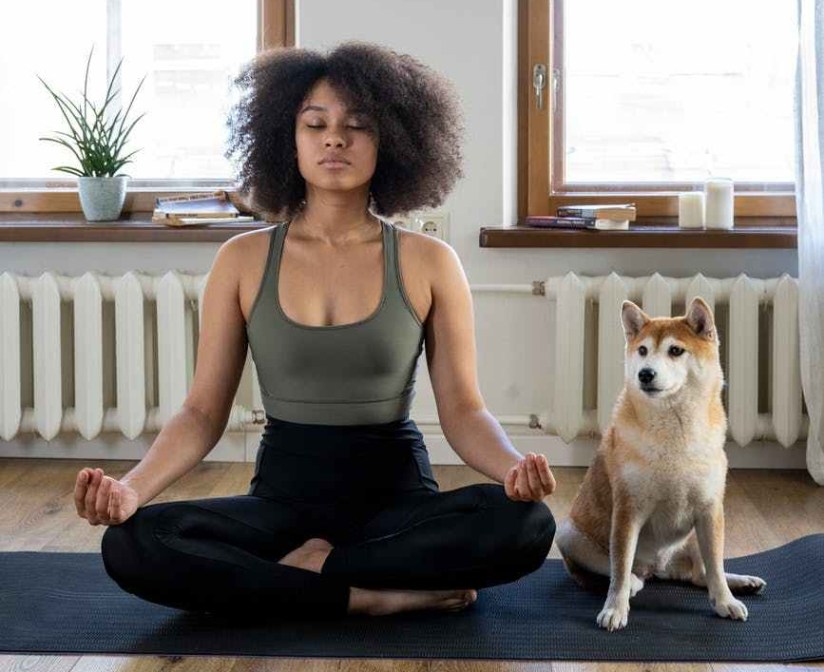
Athletic young woman of color sits in lotus position next to a dog in a peaceful room
Yoga and other ways to stay active are time-tested stress reducers.

Going outside and taking a jog or a power walk around my neighborhood is a great way to clear my head and deescalate any frustrations that I might be feeling.

Another way to calm conflict is to take a nap. Seriously, what is there that sleep can’t cure!

Eating something or doing a quick run to the Starbucks drive-through also allows me to clear my head and reset. During those times I can reevaluate where I am at and why I am feeling more prone to conflict.

If the result is stress or burnout, a conversation with my spouse or loved ones is the next step. I find that if my husband knows I am having a hard week at work or feeling stressed, he is way more likely to give me the extra time and space I need. Rather than just assuming he understands, I have learned that I need to tell him about my needs.

And when it comes to handling conflict with my kids, like when mom loses it or responds in anger or is easily frustrated, I know that sitting down with them and apologizing for my attitude and actions makes all the difference. They benefit when they see that moms and dads make mistakes, too!

Rather than just assuming he understands, I have learned that I need to tell him about my needs.

What advice would you give to others for handling conflict?

Jacqueline: I like to look at conflict as an opportunity for learning. Make sure you listen to everyone involved and learn from their perspective. Communication is the key to resolving conflict. It is essential not to take anything personal and be open to change and compromise. In the end, it does not matter who was right or wrong; what matters is moving forward in a way that does the greater good for everyone involved.

Maria: When handling conflict, I think it is important to consider how our intervention can make a difference.  Can involving ourselves in conflict make for a positive outcome? Sometimes, depending on the situation, we may even have to consider whether it is safe to intervene, which is always a wise thing to consider. I believe that if our intentions are coming from a good place, and we believe it is safe to involve ourselves, we should.

In the end, it does not matter who was right or wrong; what matters is moving forward in a way that does the greater good for everyone involved.

Taking a step back can help everyone involved. If possible, take the lead in de-escalating the situation.
Photo by Christian Diokno on Pexels.com

Cristyn: We can’t avoid conflict.  We can’t control the feelings of others.  All we can control is how we react to conflict.  We can choose to react negatively and increase tensions, or we can react positively and search for a resolution while maintaining our composure.  My best advice is to really understand that most conflict doesn’t have anything to do with me, so I don’t take it personally.  If I don’t take it personally, it’s a great deal easier not to react negatively.

Rae Lynn: My advice for those handling conflicts is to first take a time out. Oftentimes we become so clouded by our emotions that we can blow things out of proportion or not even realize the root of why we feel the way we do. Take a time out, get outside, grab a journal, do anything you can to help you center yourself and your thoughts and identify what you are feeling. I also manage my expectations. I use “I feel statements” to help the person empathize with how you are feeling.

We’re all in this together
(photo taken before COVID)
Photo by fauxels on Pexels.com

What’s the most important lesson learned from handling conflict?

Jacqueline: Sometimes we are so caught up in defending our perspective that we don’t truly listen to the other’s perception of the conflict or what the solution might look like. I have learned that when you look beyond the conflict, and at the end goal, it is easier to be open to conflict resolution. Also, it is best to confront conflict rather than avoid it. I believe everything happens for a reason and usually, after resolving a conflict, the team will be wiser and stronger than before.

Maria: The most important lesson I learned from this experience is that we must speak up when we can. Accepting situations that are unacceptable can normalize them. I think it’s important to be active participants in our society and speak up against behavior we don’t agree with, with the goal of emulating the type of society we want to be part of.

Cristyn: I mentioned it above, but my most important lesson has been learning not to take things personally.  By doing this, and remaining calm, I can turn situations of conflict into positive change events.

Rae Lynn: The most important lesson that I have learned from conflict during Covid is that no matter what, conflict is a part of life. I personally would love to avoid conflict, but from past experience, I know that never works. So, instead of avoiding, I have learned to embrace it and work through it, opting to learn from conflict rather than let it define me and my relationships.

——————————————————————————————————————————–

NU resources for conflict.

Office of the Ombudsman. National University Office of the Ombudsman at (858) 642-8368 or ombuds@nu.edu.

Per the website:

Here are some examples of common issues that can be discussed with the University Ombudsman Office:

  • Miscommunication between supervisors, coworkers, employees, and/or students
  • Confusion around policies and/or procedures
  • Ethical and unfair treatment concerns