
adult learner, Military, Navy, Parents, Undergraduate, Veteran

Going Back to School as a Veteran

Kevin Matzke headshot

Kevin Matzke, Bachelor of Science, Biology

San Diego Region

U.S. Navy Veteran

https://portfolium.com/Kmatzke88

The decision to go back to school as a veteran was not a difficult decision. The military always pushed education and the need to better oneself. Knowing the large veteran population attending National University helped in making my mind up to attend. The challenges that came with working full time, studying full-time, and maintaining a family were not what I expected. When I first started at National University, I was married but had no children. The transition into becoming a student was fairly streamlined, and because of the way the military uses intensive training, the 1 month compressed format of National Universities classes seemed natural to me. As a veteran it is sometimes hard to find common ground with people who haven’t had the shared experience of military service. I have often found myself feeling alienated or uncomfortable because my time in the military had changed my way of viewing things. This sense of alienation was one of my biggest fears going into starting up as a college student. I quickly found that a large portion of my classmates were also prior service, or active duty, and shared the same struggles as I did. The veteran community at National definitely helped in smoothing the transition from being fresh out of the military, to being a successful student, while supporting my family.

As I progressed in my education I also was growing my family.  My first daughter was born in 2016, and my second in 2018.

The addition of children definitely adds new stressors and time demands on top of the already busy work/ school schedule I was maintaining. There are days where it can be overwhelming, and on those days I remind myself that completing my education will help to provide a better future for my children. It has not always been easy, but the faculty has been very accommodating and understanding of the fact that many of us attending are parents, working to support our families while attending school. The smaller class sizes allow me more interaction with the instructors, and a makes learning and understanding the material easier, when everything outside of class is trying to distract me from my studies.

English learner, First generation, Graduate Student

First Generation Student Success

Claudia Garcia

Inaugural Cohort, Master of Family Therapy, San Diego Region

For many students, the path to college is paved by the example of their parents or grandparents. For first generation college graduates, like me, college is a path that must be created as you go. As a teenager, I had the goal to become a college graduate and often wondered if it was just a dream. My great-grandmother did not know how to read, write or count and my grandmother only attended the first grade. As I graduated high school, I did not know what tuition was and I remember searching the meaning of FAFSA.  My parents supported me through my journey but also struggled to navigate a system that was new to them. While I faced the challenges of being a first-generation college student, my family supported me and learned with me. I soon realized that in obtaining a college education I was not only accomplishing my goal but the dream of the generations before me. At the same time, I was paving the way for the generations that will come after me. Today, I am a college graduate and so is my younger sister. Looking back, the courage and determination instilled in me are what inspired me to meet my goals. These qualities enabled me to turn my goals into reality and become the first person in my family to obtain a college education.

In the present, I wish my younger self knew there are people who want to help. Besides family, there are advisors, mentors, students and professors who provide valuable support. It is astonishing how many people are interested in the success of others and all you must do is ask for the help. I wish other first-generation students were aware of the amount of support the college community provides. I must acknowledge, that my experience in college was possible because of the people that explained what FAFSA was and defined tuition to my parents when I needed to enroll. Through my time in college I learned to accept the fear of the unknown. While seeing others be confident in living the college experience I struggled to understand if I was doing things correctly. I failed to understand that they had parents and possibly many generations before them who had done this before. As first-generation college students, we must acknowledge that it is acceptable to be afraid because we are doing something new and something that is unfamiliar to us. While at times it may feel like you do not belong in college, you must remind yourself of what got you there.

The most important thing to remember is that college may be hard, but it is worth it. Having a goal and vision for where you are going in makes it a bit easier. Learning to be a college student while you are a college student can be challenging itself and having a specific goal reminds you of where you are going.  Lastly, as a student, I have learned of the importance to give yourself permission to ask for help and create your own path. It is acceptable to need help navigating college even for people who are not first-generation students. You are not the only person doing this for the first time and you are creating your unique path to a college education.

Graduate Student, Study Abroad

Why should you study abroad?

Jordan Montejano headshot

Jordan Montejano

https://portfolium.com/JordanMontejano

Creative Writing MFA

In 2018, I went on a study abroad trip to Tijuana, Mexico. Here is what I gained from the experience and why I recommend study abroad programs.

IMG_20180514_145049

Why Should You Consider Study Abroad?

Study abroad allows for you to bond with your fellow students, learn about history, practice a new language, and experience the richness of a culture through firsthand experience. It’s also a lot of fun.

IMG_20180506_164018.jpg

Cultural Interaction and Learning

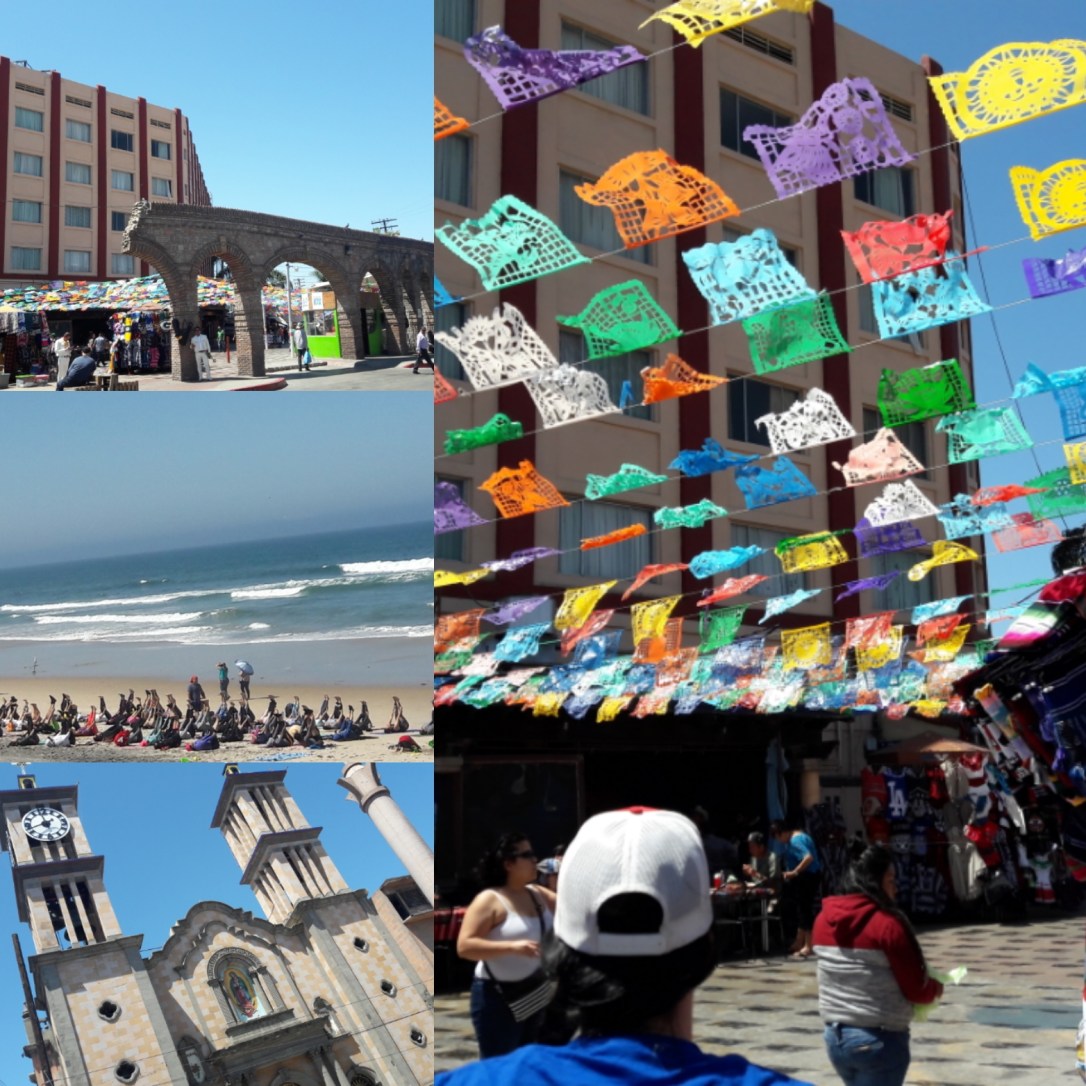
The 2018 National University Scholars Program study abroad trip to Tijuana, Mexico allowed me to learn about the people, history, language and culture of the area. I was able to admire the beauty of the natural landscape and the handmade crafts. At the Cultural Center, I viewed an extensive collection of artifacts and read up on centuries of history. I engaged in conversation with locals and enjoyed cuisine in areas of cultural interest such as Mercado Hidalgo, a large market with fresh produce and crafts, and La Calle Revolucion, a bustling street packed with various stores, restaurants, and iconic places like Caesars. Through my research, I discovered that many of the popular tourist locations in Tijuana today were first made famous during Prohibition, when there was a huge influx of people crossing the border from the US.

IMG_20180508_151127

A Group that Studies Together

What I enjoyed most about Study Abroad was bonding with my fellow Scholars through a shared and collaborative experience. The trip helped to bolster a sense of comradery and allowed for us to see things from different perspectives, so we could reflect and gain a better understanding of what we learned and how to apply it.