Written by Lux Marquez, Educators United & Pride@NU Club Member
College is chaos. The world is chaos. And if you’re reading this, you’re probably trying to survive both with your brain, your heart, and your dignity intact. So let’s talk about something radical, something loud, something that punches through the noise like a power chord at a basement show: Positive Mental Attitude—PMA, baby.
Now, before you roll your eyes and mutter “toxic positivity,” hear me out. PMA isn’t about pretending everything’s fine when it’s not. It’s about choosing to fight with love, with fire, and with the unshakable belief that you matter—even when the system says you don’t.
Bad Brains said it best: “Don’t care what they may say, we got that attitude!” That’s not just a lyric—it’s a battle cry. PMA is punk. It’s resistance. It’s showing up to class when your rent’s overdue, your government’s a mess, and your identity’s under attack. It’s writing that paper like it’s a manifesto. It’s organizing, surviving, and thriving in a world that wasn’t built for you. And Bikini Kill? “I’ve got the love that’s strong and not weak!” That’s the kind of love PMA demands. Love for yourself, your community, your weirdness, your rage. PMA doesn’t mean you’re never angry—it means your anger is rooted in hope, not despair.
In a world where marginalized students are told to shrink, PMA says: Take up space. Be loud. Be brilliant. Be unapologetically you. Whether you’re the only queer kid in your class, the first in your family to go to college, or just trying to stay afloat in a sea of deadlines and doomscrolling—PMA is your armor and your amplifier. So next time you’re staring down the barrel of that 10-page paper, a protest, or just another day of being alive in 2025, remember: You’ve got that attitude. And that attitude? It’s punk as hell.
Ayesha Anas, NU Scholar and Future Educator, shares her insights and tips on educational technology for today’s classroom
Featured Educational Technology Apps for Pre-Service Teachers
By Ayesha A. Anas
Even though COVID-19 abruptly changed the classroom dynamic from in-classroom to distance learning, it has certainly not detached teachers from the usage of educational technology tools. As pre-service teachers anxiously prepare for student teaching, what advances them, is their knowledge and implementation of pedagogy-based technology tools. Enlighten yourself by reading more about three ground-breaking applications that will enhance your teaching!
Are you looking for cutting-edge educational technology applications to use? As a pre-service teacher, passionate about leveraging digital applications, I highly recommend that aspiring elementary school teachers learn how to integrate technology into the classroom. Technology integration involves the usage of technology in the classroom to empower students with their learning. Pre-service teachers must learn how to leverage technology to address the needs of the digital generation, referring to those who grew up in a technology-enriched society and are comfortable using technology.
I further recommend the following three educational enterprising tools for future elementary school teachers to utilize for successful, engaging teaching. I encourage pre-service teachers to consider my suggestions and to explore distinct ways to adapt these unique tools creatively for their personal use in the classroom. Out of the plethora of valuable educational technology applications, I chose these three as a starting point for pre-service teachers when beginning to learn about diverse tools to use. I further use unique techniques and tried-and-true methods to optimize my usage of these applications.
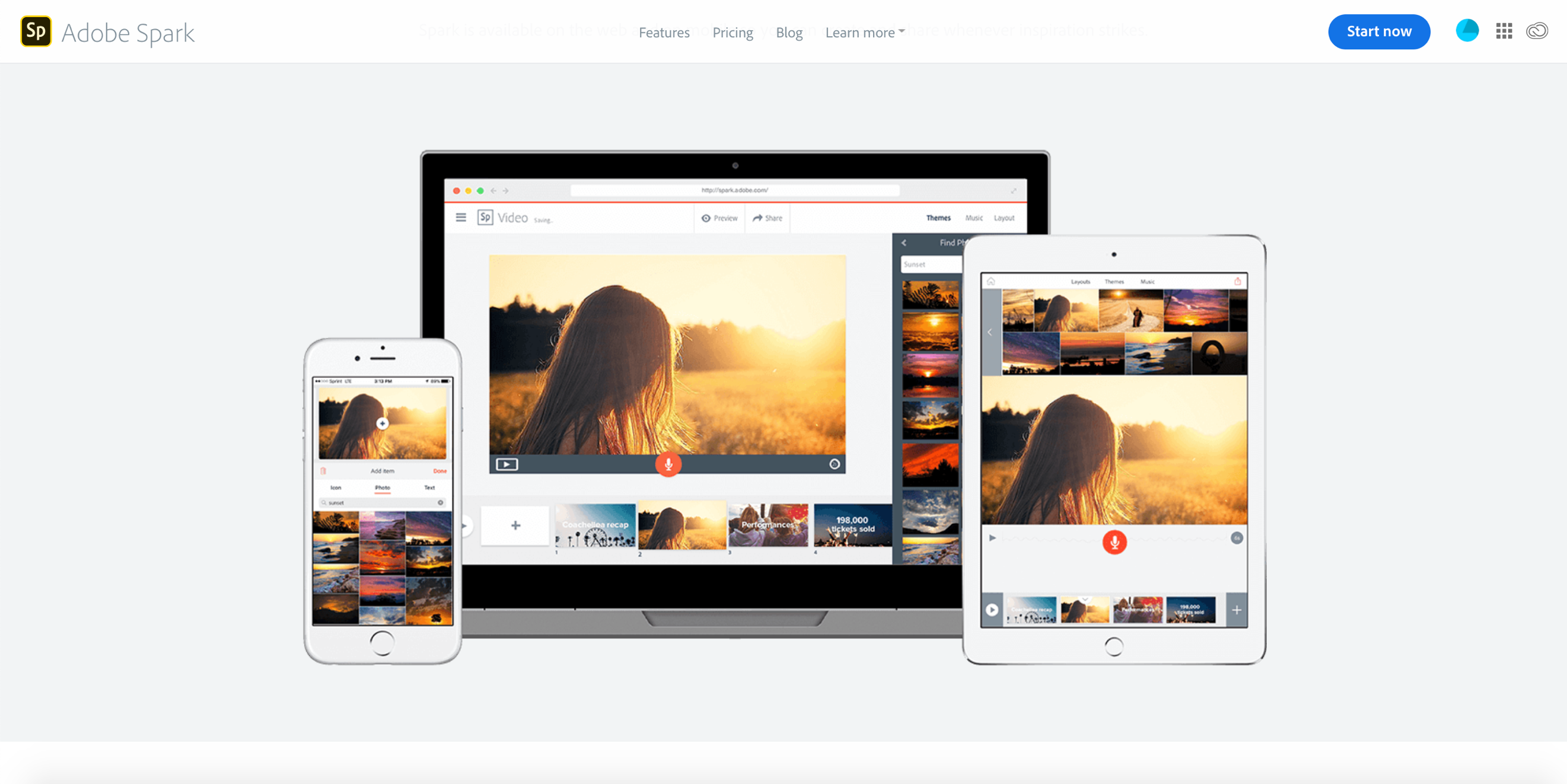
Adobe Spark is available for free and conveniently caters to educators. It was created by Adobe, one of the prevailing industry leaders in design software and publication. Furthermore, Adobe Spark is a suite of three fascinating content-creation tools: Spark Page, Spark Post, and Spark Video. Moreover, users can easily create stunning, magazine-style web pages with Spark Page, alluring graphics with Spark Post, and engaging videos with Spark Video. The paramount part about these three applications is that they barely require any professional design experience. Additionally, Adobe Spark caters to the creation of a variety of suitable educational content, from subject-matter videos with Spark Video (e.g., explaining the American Revolution to fifth-grade students in a social studies unit) to presentation slides with Spark Post that introduce vocabulary words.
The experience I gained while I was a private school teacher using Adobe Spark invoked me in creating compelling content. I used Adobe Spark to create appealing presentation graphics and stunning newsletters for parents with Spark Post and Spark Page, respectively. Additionally, I assigned projects for students to develop a captivating acrostic graphic of their names with Spark Post and About Me web pages with Spark Page. All these products ended up becoming academically beneficial and motivating, which is a metamorphosis to one’s teaching and enhances students’ learning.
For more information, I highly recommend that pre-service teachers visit https://spark.adobe.com/edu/. This website contains examples of student work and information on using Adobe Spark’s free premium features for classroom teachers. Conveniently, Adobe Spark is also available on iOS devices.
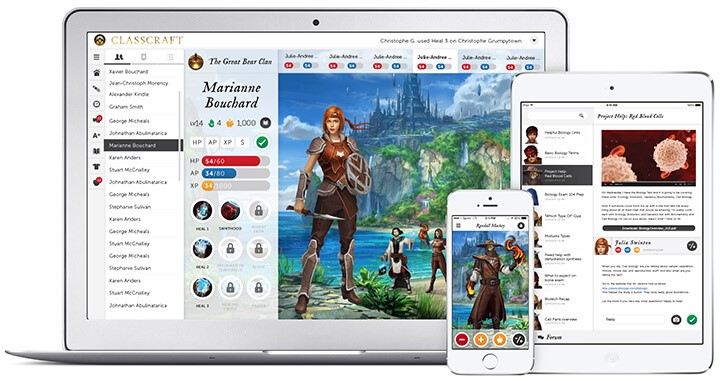
Classcraft is a gamification platform that is excellent for classroom management. It increases student engagement and motivation by harnessing the power of games to boost learning. With compelling features, Classcraft promotes positive learning experiences. Although the application encourages the use of games to enhance one’s teaching, it does not promote video-gaming. Classcraft does include video-gaming elements, such as gaining and losing points, as well as customizing characters. Additionally, it primarily focuses on behaviorist principles for behavior management by enabling the teacher to award or subtract points from students. This feature ends up encouraging constructive behaviors from students.
I used Classcraft with a variety of students from different grade levels, and they loved it. It motivated one at-risk student to achieve better grades and earn points for rewards. He ended up being accountable for his work and getting perfect scores on his exams. I was delighted and felt emotional of the positive learning outcomes. Overall, I could focus more on teaching rather than continually dealing with behavior issues. Classcraft enhanced my classroom management and helped to intimately bond with my students.
Although the paid version of this application has additional attractive features, the free version still has merit. Moreover, the free version includes gamified classroom management (e.g., with a point system), customizable characters that enhance personalization, and convenient parent features (e.g., parents implementing Classcraft at home to award their children with points, parent-teacher communication). Furthermore, the additional features from the paid version are worth investing in to increase classroom management. For example, teachers can create personalized learning quests and utilize useful tools (e.g., noise meter, formative assessment boss battles).
Furthermore, this application may be developmentally appropriate for third-grade students and higher. It may be feasible to implement with primary-grade students, as long as they are interested in fantasy genres (Wayne, Gavin, & Read, 2016). However, the point system might not be suitable for children under five years old because they do not understand the concepts of video-gaming.
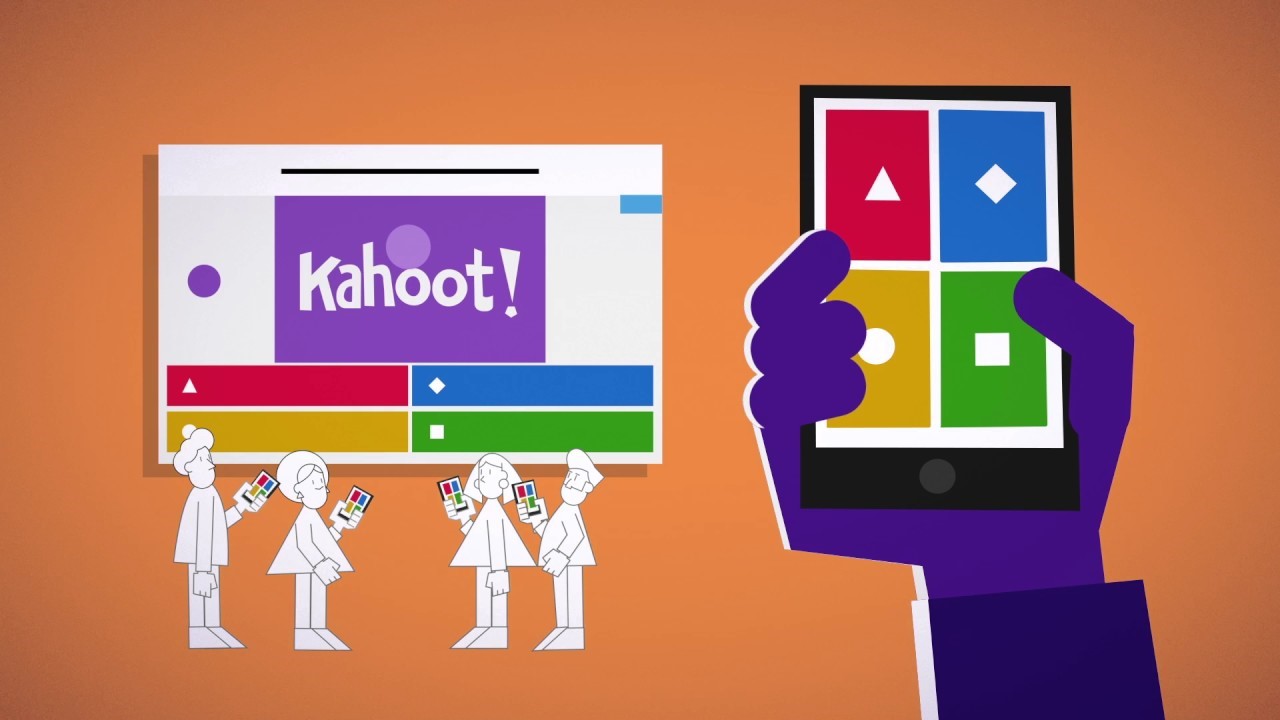
Kahoot! is a valuable game-based learning platform that enables users to create quiz games effortlessly on any subject or topic. Teachers can create effective quizzes to introduce a unit, conduct pre-assessment, reinforce knowledge, and even gather formative assessment data to monitor students’ learning and inform future instruction.
Kahoot! is a dynamic application for students to play engaging games that measure their knowledge of a particular subject. Teachers can create a variety of multiple-choice quiz questions and add additional useful content, such as visuals and multimedia, for students to view that clarify the questions. Additionally, teachers can add wait times to provide students with extra time, which benefits English Language Learners (ELLs). Furthermore, the quizzes can even include interactive polls, which teachers can use to successfully gauge how students feel about their mastery of a subject.
Kahoot! further encourages collaboration and teamwork. Students can work in groups to correctly answer the questions.
I used Kahoot! with my sixth-grade students to reinforce and review their knowledge of Mesopotamia. My students worked in teams to answer questions accurately and quickly. I also collected data on which questions my students did not answer correctly, knowing what to reteach to clarify any concepts or reinforce the material that students learned. It was delightful noticing how excited my students were about gaining points and collaborating with each other.
Final Thoughts
Remember to never use technology for the sake of using and having it replace the curriculum that must be taught to students. All teachers should use technology wisely and purposefully to enhance student achievement of all learning outcomes. Teachers have the power to use these applications at their disposal. Even though COVID-19 has altered the educational landscape, it should not cause a learning pandemic. Keep on teaching and cheers to optimizing our students’ learning potential.
“Remember to never use technology for the sake of using and having it replace the curriculum that must be taught to students. All teachers should use technology wisely and purposefully to enhance student achievement of all learning outcomes.”
References
Adobe Spark (2020). Adobe Spark across multiple devices [Screenshot]. https://spark.adobe.com
Emily Klein shares her tips for a career in Early Childhood Education
Emily Klein
Master’s in Early Childhood Education
College is hard. Going to college and having a full-time job is even harder. Going to college, having a full-time job, and taking care of a family member is even more challenging. These are all challenges college students face on the daily, and while some may take it in stride, others might struggle. What many people don’t know is that I take care of my disabled mother and with that comes helping to pay the bills. Taking care of a disabled family member has always been a major factor in my career choices.
Growing up, I was never a great student, and I struggled a lot in math, especially. While I really wanted to be a teacher, my math skills held me back. Because of my poor math skills I knew there was no way I was going to pass the math portion of the CBEST or the CSET. I also knew that I couldn’t give up the full-time job I had to do student teaching for free – taking time away from my work schedule was not an option, as I helped support my mother. But what career would I do, and how would I get it done AND work full-time at the same time? After much thought I turned to writing, but, after a year of journalism classes, I slowly started to realize that this wasn’t the right career path for me. I changed my major to ornamental horticulture, but this wasn’t the right fit either. Four years later I finally graduated with a double major associate degree in Journalism and Social and Behavioral Sciences.
Math- Never my strong suit.
After wasting four years in community college, struggling to pay the bills, taking care of my mom, and trying figure out my future, I finally enrolled in a degree completion program in early childhood education. I decided to pursue ECE because in the end my math struggles kept me from passing the CBEST. Before my third attempt at taking the test I decided to let it go and give it to God. I said if I didn’t pass it the third time around then being a credentialed teacher wasn’t in the cards for me and I was made to do something greater. My greater would end up being early childhood education. At this point I just wanted to hurry up and finish my education so that I could have a better future. Completing my bachelor’s degree was a struggle – I slowly realized that I was in the big leagues and this wasn’t community college anymore. Two years later I would walk across the stage with my gold cords around my neck and the highest Latin honor, summa cum laude, printed on my bachelor’s diploma.
After I finished my bachelor’s degree I got my dream job as an early childhood educator at a great school and couldn’t have been happier. However, two years into my career I hit a plateau and found that I wanted more in life and out of my career. I was tired of always settling for less and wanted to make a greater impact on those around me. I had this feeling that I was called to do greater things but was not able to figure it out what it was that I was called to do. So I did the only thing I knew how to do and went back to school. I enrolled at the local community college and started taking classes in criminal justice thinking that I wanted to be a police detective. After a less-than-thrilling semester in the world of criminal justice, I decided to keep on the search and take classes in a different field this time – social work. I enjoyed the social work classes but realized that I didn’t have the heart to take away children from their families or put myself in danger every time I entered the home of a stranger to take away said children.
We all wish the path forward were this clear.
Although I gained a lot of valuable information from the class, I didn’t want to be a social worker. At the same time I was taking the social working class I was also taking administration classes for ECE. One day I was sitting in class talking to a peer when out of nowhere a lightbulb went off. I FINALLY realized what it was that I was called to do: Be a college professor. I spent most of my early adult years in community college, so why not get my master’s degree and come back and teach at the very same school where I started my college education? However, the thought of more debt crippled me, but I knew I would never make it to my goal of being a college professor and early childhood education mentor without a master’s degree, so I pulled the band aid off and went for it.
I wanted a program that I could do at home and at my own pace; I also knew I didn’t want to wait two extra years to finish a program. National’s unique online platform allowed me to finish my master’s in a year, from home, all while keeping my dream job and taking care of my mom. I would no longer have to sit in three-hour classes every night, get home late, and stay up even later to do homework. Being selected to become a part of the NU Scholars Program was a huge honor and a huge relief, and I am excited to be part of an organization that gives back to the community.
No matter how many challenges life threw at me, I continued with my education because I wanted a better life for myself and for my future family. It may have taken me longer than I wanted or planned, but I persevered. I wanted to have a positive impact not only on children, but on adults as well, and this was the only way I knew how to do it. I wanted to have a life that I was proud of; and I am now truly proud to be one step closer to my goal of being a college professor. College is hard. Life is hard. But with strength and determination you can accomplish anything you set your mind to. No matter what was thrown at me I persevered, and you can, too. Don’t let the negatives of life and the pressures of family consume you. Stay focused and stay committed. You may think the odds are against you, but you, too, can rise against them.







 The CSEA Student Voice